Classic car repair, service, and flatbed transport.
Cars from the 1960s, 1970s, and 1980s, worked on at 619 Coney Island Avenue in Brooklyn and moved on our own flatbeds. Family owned since 1977, which makes us nearly as old as the cars.
Classic Car Service
Brooklyn, family owned since 1977. American and Japanese classics.
- 1960s
- 1970s
- 1980s
Old cars are not rare in this city.
New York DMV registration data shows more than 14,000 cars and light trucks from model years 1960 through 1989 still actively registered across the five boroughs, more than 3,000 of them in Brooklyn. They are daily drivers, weekend cars, and projects that have been in one family for decades.
- Queens
- 4,756 registered
- Brooklyn
- 3,062 registered
- Manhattan
- 2,818 registered
- Staten Island
- 2,734 registered
- The Bronx
- 1,202 registered
Source: New York State DMV registration data, August 2026 snapshot of the five New York City counties. Counts are active registration records with a model year of 1960 through 1989, for passenger cars, wagons, pickups, and vans. A registration is a record in a state database, not a car parked outside.
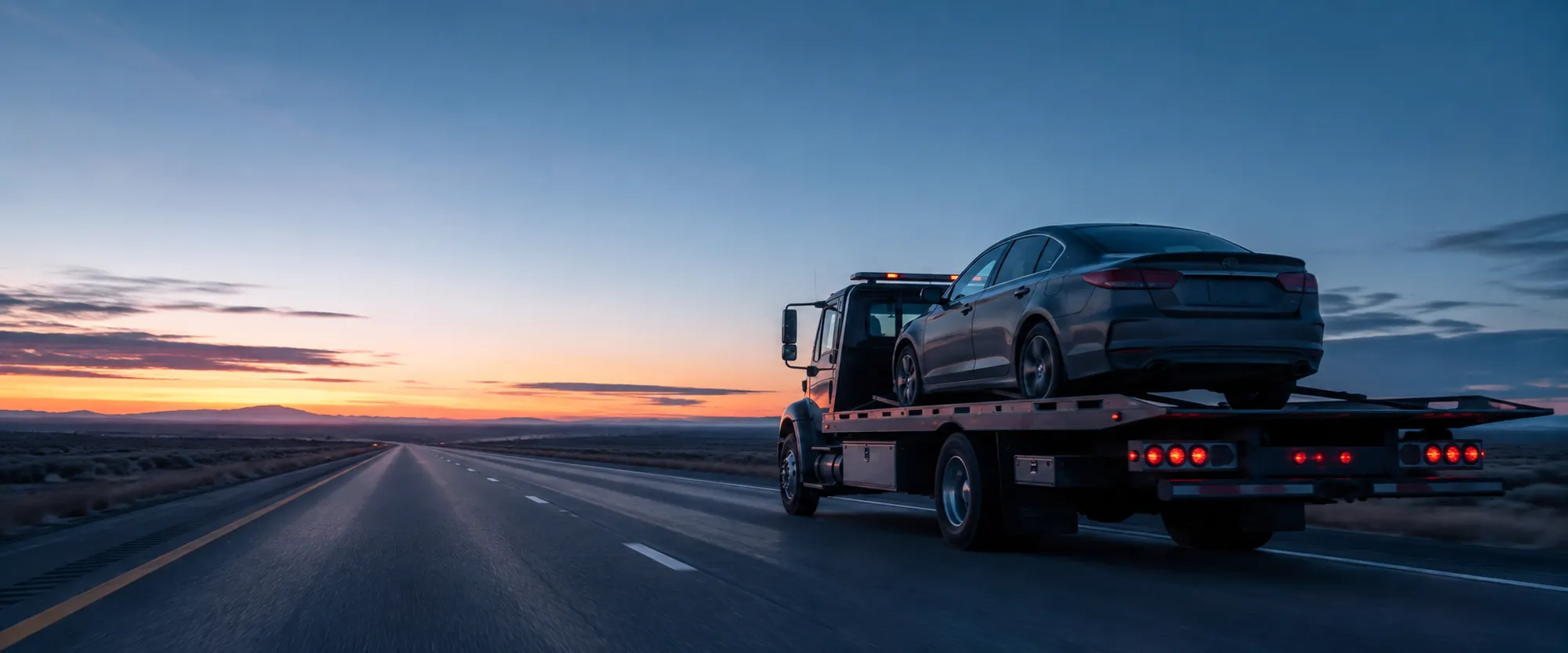
Classics move on flatbeds.
Low front ends, soft tires, cars that have not run in a while, and cars nobody wants to drive through traffic on a Tuesday. All of that is a flatbed job, and the flatbeds are ours.
Our Own Flatbeds and Drivers
We are not a broker handing your car to whoever answers. The trucks are ours and so are the people driving them, dispatched from Brooklyn.
Full Deck, Nothing on the Road
A flatbed carries the whole car rather than dragging two wheels. That is the right way to move anything low, non-running, or worth more than the tow.
One Company, One Invoice
The same company that picks the car up is the one that works on it, so nobody pays a second tow to move it between two strangers.
Moving one further than Brooklyn?
Out-of-city moves, dealer transfers, auction pickups, and relocations run out of the same fleet, quoted per mile before we load.
The cars this page is about.
The list runs to 35 cars, by era and by type. American and Japanese, because that is where we are quickest and where the parts are easiest to find. It is not a door policy: if yours is not on the list, call and ask.
The 1960s.
Carburetors, points ignition, drum brakes on a lot of cars, and no electronics to speak of. Everything on one of these is mechanical, which is why they are approachable and why they need somebody who has seen the mechanical version of a problem. Detroit is the whole story in this decade: the Japanese makers had barely arrived here yet.
American muscle
Ford Mustang
The car that created the pony class, sold on looks and personality rather than size. A first-generation coupe or convertible is still the most recognizable classic on a New York street.
Chevrolet Camaro
Chevrolet's answer to the Mustang, sold as a coupe or a convertible and ordered from an options list long enough that no two are quite alike.
Chevrolet Corvette
America's sports car, fiberglass-bodied and recognizable from across a parking lot. The mid-1960s Sting Ray is the one that set the template for everything after it.
Chevrolet Chevelle
A mid-size Chevrolet plain enough to be ordered as a family car and sharp enough to become the definition of the muscle era.
Pontiac GTO
Widely credited with starting the whole thing by putting a full-size engine in a mid-size body. Every rival had copied the idea inside of a couple of years.
Dodge Charger
A long fastback with a menacing face, and one of the few cars whose reputation was built as much on film and television as on the road.
American cruisers and trucks
Chevrolet Impala
The full-size Chevrolet of the decade and the one that carries the most cultural weight in this city. Hardtops and convertibles are what people restore.
Cadillac DeVille
Full-size Cadillac comfort from the years when that phrase meant something specific: long, quiet, and heavily chromed.
Ford Bronco
Short, boxy, and stripped down, built as a working utility vehicle and now collected as a style object. The originals are much smaller than people expect.
Chevrolet C10
GM's full-size pickup from the years when a work truck was still a simple thing. People restore these now instead of retiring them.
The 1970s.
The decade where emissions equipment arrived and nothing was standardized yet. Vacuum lines, early smog plumbing, and the first electronic ignitions sit next to parts that are pure 1960s, and telling which is which is most of the work. It is also the decade the Japanese cars showed up here and stayed.
American muscle
Pontiac Firebird and Trans Am
The Camaro's Pontiac sibling, and by the late 1970s the signature American car of the decade, hood decal and all.
Chevrolet Nova
A plain compact Chevrolet that a lot of people quietly turned into the quickest thing on their block. Simple to work on, which is most of why so many of them survived.
Plymouth Road Runner
Mopar muscle with everything stripped off it that was not speed, named after a cartoon and sold with the horn to match.
American cruisers and trucks
Cadillac Eldorado
A personal luxury coupe of enormous length and front-wheel drive, styled with no attempt whatsoever at subtlety.
Chevrolet Monte Carlo
A personal luxury coupe on a mid-size frame, and a fixture on New York streets for decades. It found a second life in the custom scene and never left.
Oldsmobile Cutlass Supreme
The mid-size Oldsmobile that was, for a stretch of the decade, parked on more American blocks than anything else. Comfortable, plain, and easy to live with.
Chevrolet El Camino
Half coupe, half pickup, and unapologetic about being both. It carries like a truck and drives like a car, which was always the point.
Jeep CJ-7
The civilian Jeep in its most familiar form: open, plain, and endlessly modified. Almost none of them are still as they left the factory.
Japanese
Datsun 240Z
The car that proved a Japanese manufacturer could build something people wanted for how it looked and drove rather than for what it cost.
Datsun 510
A small, light sedan that handled far better than a modest family car had any business handling. The one that made a lot of drivers take the brand seriously.
Toyota Celica
A neatly styled coupe that took the pony-car idea, made it smaller, and made it dependable.
Honda Civic
A tiny front-drive hatchback that changed what an economy car was allowed to be. Small, light, and screwed together better than anyone expected at that size.
Toyota Land Cruiser FJ40
A short, upright, go-anywhere machine whose shape has aged into an icon. Built for work and now kept for weekends.
The 1980s.
Fuel injection, early engine computers, and diagnostic systems that came before the standardized port every scanner plugs into today. These cars are electronic without being modern, which is its own category of problem.
American muscle
Ford Mustang, Fox body
The lightweight rear-drive Mustang of the 1980s: plain-looking, cheap to own for years, and a permanent favorite with people who modify cars. The notchback and the hatchback each have their own following.
Buick Grand National
A blacked-out, turbocharged Regal, and the American performance car of the decade that people still argue about. All black, all business.
Chevrolet Camaro, third generation
Low, wedge-shaped, and unmistakably of its decade, with the IROC-Z as the version everyone pictures.
Chevrolet Corvette C4
The Corvette's sharpest reinvention: flat and angular, with a digital dash and a clamshell hood that lifts the whole front of the car.
American cruisers and trucks
Cadillac Fleetwood Brougham
The last of the big rear-drive Cadillacs, and still the one parked on a Brooklyn block on a Sunday with a cover half off it.
Jeep Grand Wagoneer
Wood-sided, leather-lined, and four-wheel drive. The luxury SUV before anybody used that phrase for anything.
Jeep Wrangler YJ
The Jeep that replaced the CJ, remembered as much for the square headlights it wore as for anything else it did.
Japanese
Toyota Supra
A six-cylinder grand tourer that grew out of the Celica and became its own car, with pop-up headlights and a long hood.
Nissan 300ZX
The Z car in its 1980s form: softer, wider, and more of a highway cruiser than the 240Z that started the line.
Mazda RX-7
Low, light, and rotary-engined, which makes it unlike anything else on this list. The engine is the entire personality of the car.
Honda CRX
A tiny front-drive two-seater that felt quick because it weighed so little. A tuner favorite before that word was in general use.
Toyota Corolla, AE86
The last rear-drive Corolla, sold as a sensible small car and adopted by drivers who worked out it was anything but. Its following has only grown since.
Why an old car is a different job.
None of this is about the car being difficult. It is about the car being from before the assumptions every modern shop works under.
There Is No Diagnostic Port to Plug Into
On most of these cars nothing reports itself. Finding the fault means testing, measuring, and following the system by hand instead of reading a code off a scanner.
Carburetors and Points Are a Different Discipline
Fuel and spark on a pre-injection car are mechanical adjustments, not software. It is ordinary work for anyone who learned on it and unfamiliar work for anyone who did not.
Drum Brakes and Old Hydraulics Behave Differently
Braking systems from these decades were designed around different assumptions than the car in the next bay, and they want to be treated as what they are.
Parts Sourcing Takes Patience
Some parts are still made, some are reproduction, some are used, and some take a phone call to somebody who has one on a shelf. That search is part of the job and part of the timeline.
Rubber and Seals Age Even When the Car Does Not Move
Hoses, gaskets, bushings, and weatherstripping give up with time rather than with mileage, which is why a low-use car can still need attention.
Originality Is the Owner's Decision, Not the Shop's
Keeping a car correct and making it easier to live with often pull in different directions. That is a conversation to have before anything is taken apart.
Tell us about the car.
What it is, what year, and what it is doing or not doing. If it is not on the list above, ask anyway. If it needs to be picked up, say so on the same call and we will send a flatbed.